|
In a series of blog posts, I want to recount my experience of writing This Sacred Isle. These posts won’t form a ‘how to write a novel’ guide, and neither would I claim to have all the answers when it comes to the art of novel-writing. In a way, I hope they serve the same function as the ‘extras’ on a DVD / Blu-ray disc. I aim to cover the process from the initial ideas for a novel, through research, planning, draft-writing and editing. I hope my posts will offer some fruitful points of discussions and useful ideas for writers and would-be writers; I also hope to help you avoid some of the pitfalls into which I stumbled! I'll begin by looking at the inspiration behind the writing of the novel. 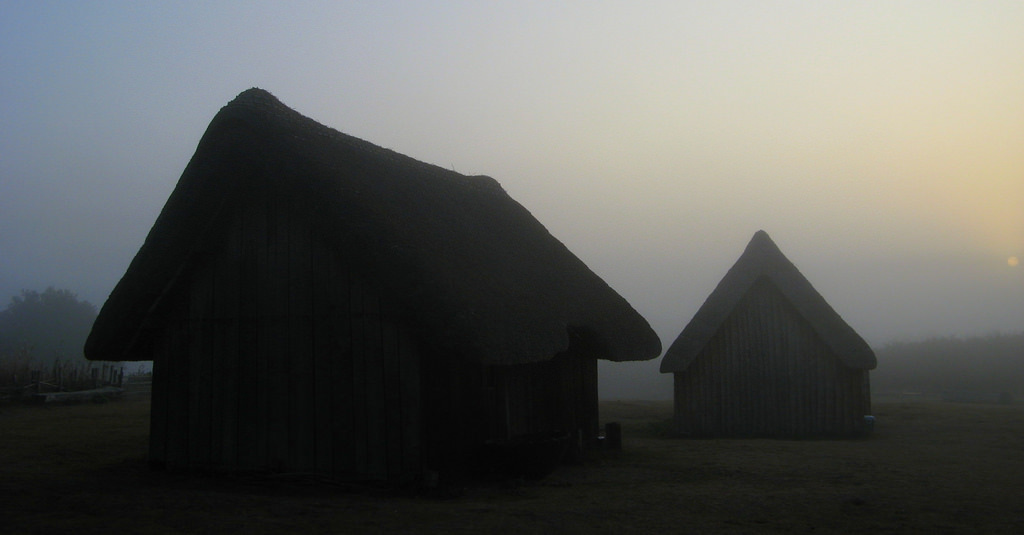 West Stow Anglo-Saxon village – a wonderful place to learn and step back in time ‘This Sacred Isle’ is set in 6th century Britain, a period commonly referred to as the ‘Dark Ages’ (some academics refer to it – probably more accurately – as the ‘Early Middle Ages’, but that’s less snappy). The Romans had abandoned Britain more than 150 years earlier, a withdrawal which eventually plunged much of the island into chaos. Waves of invaders (though they would have considered themselves settlers) came to Britain, especially Germanic tribes such as the Angles, Saxons and Jutes. These newcomers became the dominant force in much of England, either displacing or absorbing (historians fiercely debate the violence of this ‘take-over’) the native Britons. This period has long fascinated me, a period when kingdoms and regional identities started to coalesce, with the very foundations of the nations of Britain taking shape. At this time, Britain was largely a wild land, rich in myth and ruled by warrior-kings, and a land where the people faced perils that many parts of today’s world still endure: war, disease and famine. In some ways, this is a post-apocalyptic world, with scattered groups of individuals struggling to establish order within the bones of Roman Britannia. In addition, the plight of the Britons intrigued me; how would they feel, often supplanted by the aggressive newcomers from across the sea, the last remnants of the civilisation of Roman Britannia crumbling? The action in the novel takes place in East Anglia (if you’re looking at a map of England, it’s the bulge to the east of the country), which was a kingdom founded by Angles who came to Britain from the continent. As a native East Anglian, using the landscape and atmosphere of the region felt natural to me.  East Anglia – it’s changed a bit since Anglo Saxon times…the world famous Willis Building in Ipswich The Anglo-Saxon cosmology and mythology feels fantastical, but it is one of the core principles of my story that it would feel real to the people, they would make no distinction between what might be called ‘supernatural’ and real life – presenting this was a challenge!
I also wanted to capture a hint of the linguistic skill of the Anglo-Saxon people. Confession time – I do not speak or read Old English, though I have researched the language. This Sacred Isle is clearly written in modern English, but the Anglo-Saxon kennings intrigued me and I sprinkled these throughout the story to add a flavour of their rich, poetic forms of expression. The more I thought about it, the more I felt that this period, this setting, offered strong potential for a novel. It was a story I wanted to tell, even one I needed to tell. And I do think this is an important point when it comes to writing novels – the subject matter has to grip you, the author. If you want to write a novel you have to be prepared for the long haul, not just writing but research, and that journey will be much more rewarding if you are writing about a subject that fascinates and excites you. Therefore, when setting out on your writing journey, that this is a book you not only want to write, but have to write. What inspires you to create? Please leave a comment below and join the conversation.
0 Comments
Leave a Reply. |
Archives
October 2023
Categories
All
|
 RSS Feed